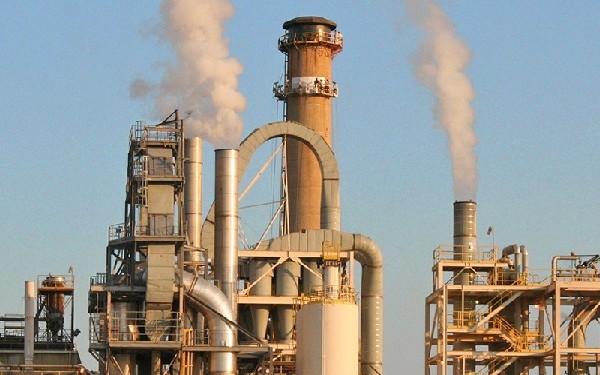
Plant equipment chimneys, silos, and ductwork form the backbone of industrial infrastructure. Chimneys safely disperse combustion exhaust, silos store bulk materials, and ductwork acts as the vital conduit routing air, gases, and materials between equipment.
Industrial Chimneys
Industrial chimneys (or smokestacks) are towering structures designed to vent hot, toxic, or hazardous combustion gases from boilers, furnaces, and kilns into the upper atmosphere.
Function: They safely dilute and disperse pollutants like \(SO_{2}\) and \(NOx\), protecting workers and preventing local environmental nuisances.
Types: These include self-supporting steel stacks, guyed stacks, and massive concrete or masonry chimneys lined with specialized steel.
Key Components: Chimneys include liners, ash hoppers, expansion joints, aviation hazard lighting, and lightning protection systems.
Industrial Silos
Silos are large, cylindrical structures primarily used for the bulk storage and controlled discharge of granular, powdered, or fragmented materials.
Function: They provide secure, weather-proof environments for holding raw materials or finished products before they are processed or shipped.
Types: Commonly used in manufacturing and power plants, these include cement silos, fly ash silos, and coal bunkers. They can be flat-bottomed or funnel-shaped (conical) at the base to allow gravity discharge.
Key Components: Silos often integrate load cells for weight tracking, aeration systems to prevent material bridging (clumping), and dust filtration filters.
Industrial Ductwork
Ductwork refers to the network of enclosed metal conduits (pipes or trunks) used to transport air, exhaust, dust, or particulate-laden gases throughout a facility.
Function: Acting as the "blood vessels" of a plant, ducts move hot gases to chimneys, transport fly ash to silos, or distribute conditioned air to different process units.
Types: Ducts are typically fabricated from galvanized steel, stainless steel, or specialized alloys depending on temperature and corrosion requirements.
Key Components: They consist of the main trunk, branches, dampers, and expansion joints. Because of the extreme conditions, these elements often require heavy insulation to retain heat and prevent structural warping.